
Wire conveyor belts are designed for environments where standard rubber, PVC, or modular plastic belting cannot perform. When a process involves extreme heat or sub-zero temperatures, requires drainage or airflow through the belt, or demands a hygienic surface that withstands regular chemical washdowns, wire belts are the practical solution. Tegman supplies a broad range of wire belt types alongside matched drive components — sprockets, rollers, and chains — to suit food processing, industrial, and high-temperature applications across a wide range of sectors.
This post covers the main belt types available from Tegman, the materials and maximum operating temperatures that determine suitability, the drive components that complete the system, and the key factors to consider when selecting a belt for a specific application.
Tegman’s Range and How to Choose the Right Belt
Wire conveyor belts are designed for environments where standard rubber, PVC, or modular plastic belting cannot perform. When a process involves extreme heat or sub-zero temperatures, requires drainage or airflow through the belt, or demands a hygienic surface that withstands regular chemical washdowns, wire belts are the practical solution. Tegman supplies a broad range of wire belt types alongside matched drive components — sprockets, rollers, and chains — to suit food processing, industrial, and high-temperature applications across a wide range of sectors.
This post covers the main belt types available from Tegman, the materials and maximum operating temperatures that determine suitability, the drive components that complete the system, and the key factors to consider when selecting a belt for a specific application.
Why Wire Belts Work Where Standard Belts Cannot
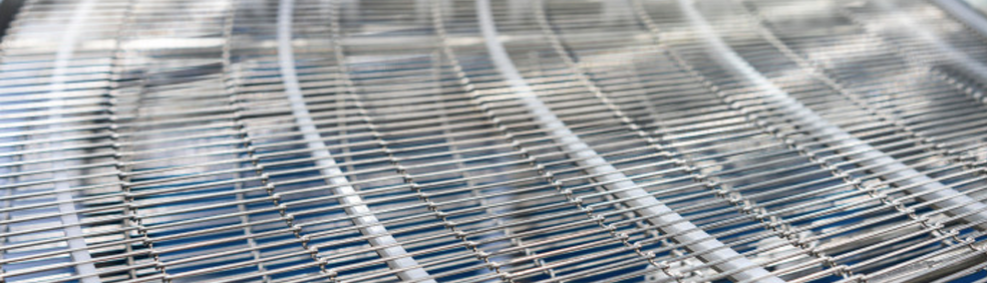
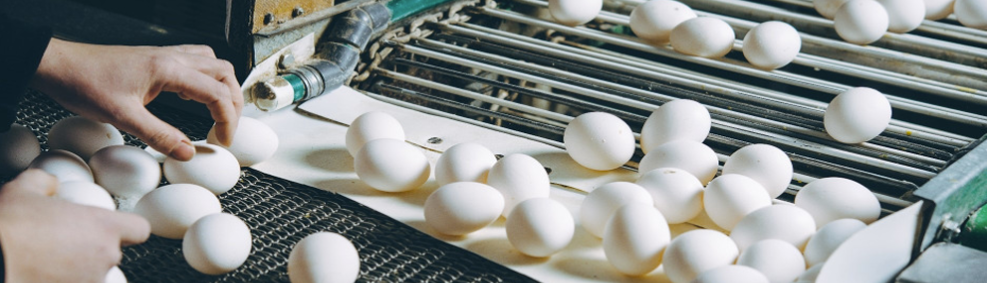
The defining characteristic of a wire belt is its open mesh structure, which allows air, heat, liquid, and steam to pass freely through and around the product being conveyed. In freezing tunnels, cold air circulates directly around each product — making wire belts standard in IQF production lines. In baking ovens, heat reaches the product evenly from above and below. In washing and draining applications, liquid passes through the belt rather than pooling on the surface. Wire belts also withstand temperature ranges and cleaning chemicals that would destroy conventional belts.
Tegman’s Wire Belt Range
Tegman supplies twelve wire belt types, covering light-duty through to heavy industrial applications. The correct belt depends on the process, load, required open area, and whether the application involves straight running, spiral conveying, or turning.
Food Processing Belts
The Balance Weave Mesh Belt offers excellent tracking and multiple drive options. The Rod Ladder Belt is a straight-running bakery staple suited to gentle handling and easy cleaning. The Ladder Belt (Flat Flex / Enrober) lasts over twice as long as standard belts, with up to 78% open area and a clean-in-place design for enrobing, frying, and breading lines. The Honeycomb Belt provides large open area and free air circulation for cooking, drying, and cooling. The Cord Weave Belt has a high-density flat surface for biscuit baking and bottle annealing. The Pasteuriser and Bottle Washing Belt is available on request.
Spiral and Freezer Belts
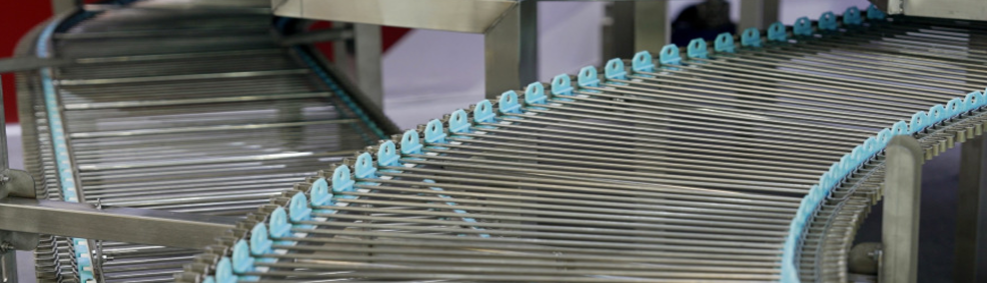
The Spiral Freezer Link Belt handles left and right-hand turns and runs multi-turn or straight. The Spiral Freezer Belt is designed for multi-tier spiral conveyors, suited to freezing, proofing, baking, and pasteurising.
Heavy-Duty Belts
The Eyelink Belt handles high loads with a flat open surface, customisable with flights and side guards. The Plate Belt is built for presswork, die-casting, and forging in mild steel or stainless steel.
Specialist Belts
The Chain Link Belt is lightweight and cost-effective for light-duty drying, cooling, and lift guard applications. The Hex Mesh Belt uses hexagonal apertures for sizing and grading, available in Standard and Rod Reinforced.
Materials and Maximum Operating Temperatures
Material selection is determined by the process temperature, the presence of corrosive substances, and hygiene requirements. The table below shows the maximum wire operating temperatures for the materials Tegman supplies:
- Galvanised Mild Steel — up to 400°C
- Chrome Molybdenum (3% Chrome) — up to 700°C
- 304 Stainless Steel — up to 750°C
- 321 Stainless Steel — up to 750°C
- 316 Stainless Steel — up to 800°C
- 37/18 Nickel Chrome — up to 1,120°C
- 80/20 Nickel Chrome — up to 1,150°C
For food processing environments, 304 Stainless Steel is the standard grade, covering the full temperature range from blast freezing through to baking tunnel ovens. 316 Stainless Steel is specified where higher corrosion resistance is required, typically where acidic products or high-concentration cleaning chemicals are in use. For high-temperature industrial furnace applications, Nickel Chrome grades cover operating temperatures up to 1,150°C.
Drive Components
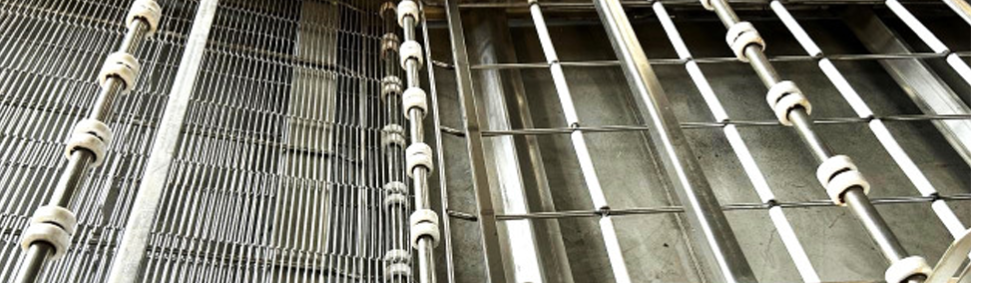
A wire belt system is only as reliable as the components driving it. Tegman supplies matched drive components alongside the belt itself, including drive sprockets, rollers, and chains.
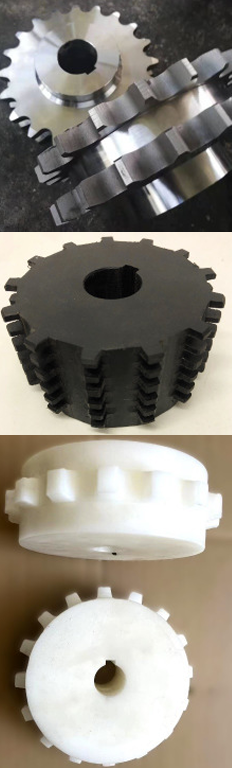
Sprockets are precision machined to fit the specific belt, ensuring correct engagement and reducing wear on both the belt and the drive system. Components are available in stainless steel for food processing and hygiene-critical environments, and in polyacetal plastic where corrosion resistance and product build-up prevention are the priority. Both materials are suited to regular washdown cycles, which is an important practical consideration in food production environments where cleaning frequency is high.
Rollers and chains are supplied to complete the conveyor system. Using matched components from the same supplier ensures that each part is specified for the belt it drives, which extends service life and reduces the frequency of unplanned maintenance. Contact Tegman’s technical team for drive component specifications, available in a variety of materials to meet your specific requirements.
Choosing the Right Wire Belt
With twelve belt types across a wide range of materials, the correct starting point is the process requirement rather than the belt name. Four questions narrow the selection:
What temperatures will the belt be exposed to?
This determines the material grade. Food processing lines operating at ambient to oven temperatures are covered by SS304. Industrial furnace applications require Nickel Chrome grades. Establishing the minimum and maximum operating temperatures, including cleaning temperatures, is the first step.
What load will the belt carry, and does it need to turn?
Light product on straight-running conveyors suits the Rod Ladder Belt or Balance Weave. Heavier loads require the Eyelink or Plate Belt. Spiral and turn-curve conveyors require the Spiral Freezer Belt or Spiral Freezer Link Belt, which are built for lateral flex.
What open area does the process require?
Where airflow or drainage through the belt is critical, a high open-area belt (Ladder Belt at up to 78%, or Honeycomb) is the correct choice. Where even heat distribution over a dense product surface is needed, the Cord Weave’s minimal open area is the appropriate specification.
What are the hygiene and cleaning requirements?
Food-grade production requires SS304 as a minimum, with SS316 for aggressive chemical environments. Clean-in-place designs such as the Ladder Belt are suited to high-frequency washdown operations.
Tegman’s technical team can advise on the correct belt type, configuration, and material for a specific application, including non-standard requirements.

Speak to the team
Tegman supplies wire conveyor belts across a full range of types and materials, from light-duty Chain Link and Hex Mesh through to heavy-duty Eyelink and Plate Belts, and specialist Spiral Freezer configurations for multi-tier food processing lines. Drive components, including precision-machined sprockets in stainless steel and polyacetal plastic, are available to complete the system.