
In the world of industrial material handling, few components are as versatile or universally essential as Perforated Media. From the heavy-duty demands of mining and aggregate processing to the delicate, hygienic requirements of the pharmaceutical and food industries, these durable components play a critical role in filtration, separation, and structural support.
For plant managers and engineers, sourcing the right product is not just about finding a piece of metal with holes in it. It is about finding a solution that offers the correct aperture, the right material grade for the environment, and the precise durability to withstand operational stresses—whether that solution is a screen, a basket, or a complex cylinder .
What Is Perforated Media?
At their core, perforated products are durable metal components—typically manufactured from stainless steel, mild steel, or aluminium—that have been punched with precise holes or slots. While they are often supplied as flat sheets, the material is frequently formed into cylinders, filters, strainers, baskets, and other perforated accessories to suit specific machinery
While the concept is simple, the function is vital. These components are widely used in filtration and separation systems to allow fluids or gases to pass through while effectively blocking solids. This makes them the primary barrier in many screening processes. However, their utility extends beyond simple sieving. They frequently act as standalone filters or provide the necessary structural support for finer, more delicate filter media that cannot withstand high pressures on their own.
The strength and corrosion resistance of perforated media make it ideal for demanding environments where consistency and longevity are non-negotiable
Material Specifications: Matching the Metal to the Job
Selecting the correct material is the first step in ensuring the longevity of your screening media. Tegman provides a variety of material types to suit different environmental conditions, ranging from abrasive mining applications to corrosive chemical processing.
1. Mild Steel (MS) Mild steel is a robust and cost-effective option for general industrial applications where corrosion is less of a concern but strength is required. Tegman stocks mild steel plates in standard sizes such as 2450 mm x 1225 mm, with thicknesses ranging from 0.5 mm up to 6.0 mm.
2. Stainless Steel (SS304 and SS316) For industries requiring high hygiene standards or resistance to corrosion, stainless steel is the standard.
-
SS304: A versatile grade used widely in general processing.
-
SS316: A superior marine-grade stainless steel offering higher resistance to corrosion, making it essential for chemical, pharmaceutical, and coastal applications. Tegman’s stainless steel stock typically comes in 1220 mm x 2500 mm sheets, available in various thicknesses to suit fine or heavy-duty screening.
Aluminium and Galvanised Steel Plates are also available in aluminium for lightweight applications or Electro Galvanised steel for added surface protection against rust.
Apertures and Patterns: A Solution for Every Particle
The efficiency of a perforated plate is dictated by its open area and the shape of its apertures. Different materials flow differently, and choosing the wrong hole shape can lead to clogging or inefficient separation.
Tegman offers an extensive range of aperture shapes to suit any separation requirement:
-
Round Apertures: The most common configuration, available in straight or staggered pitch.
-
Square Apertures: Often used where a higher open area is required.
-
Slotted Apertures: Available with round ends or square ends, ideal for sorting materials that might peg in round holes.
-
Hexagonal, Oval, and Diamond: Specialised shapes for specific architectural or processing needs.
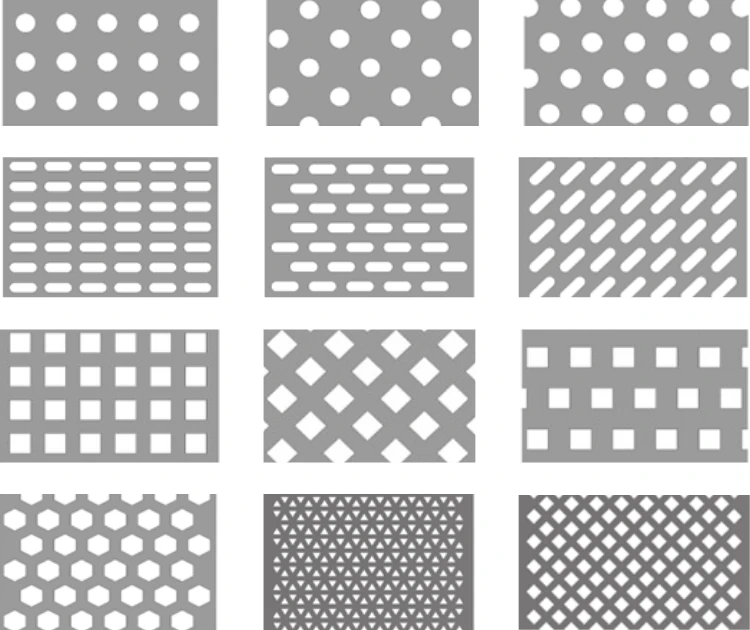
Pitch Configurations The “pitch” refers to the distance between the centres of the holes. This determines the structural integrity of the plate and the percentage of open area. Tegman supplies these patterns in both:
-
Straight Pitch: Holes are aligned in straight rows and columns (e.g., Square One-Way).
-
Staggered Pitch: Holes are offset (e.g., Staggered 45° or 60°), which often provides better screening efficiency and strength distribution .
Key Industry Applications
Perforated plates are the workhorses of the processing world. Tegman’s products are found across a broad spectrum of sectors, each utilising the media for specific critical tasks
1. Water Treatment:
In this sector, reliability is paramount. Perforated plates are used as intake screens to prevent large debris from entering the system, protecting pumps and downstream equipment. They also function as sand filters and sludge screens, separating solids from wastewater streams effectively.

2. Food & Beverage:
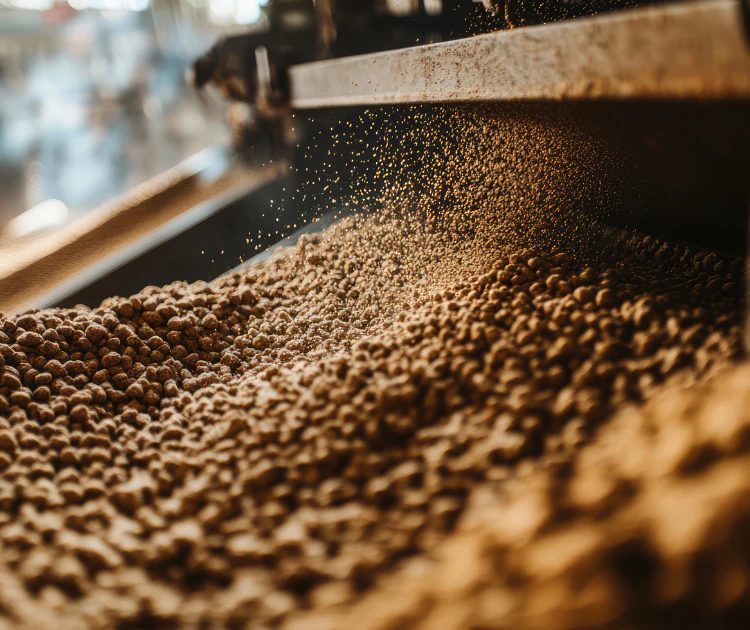
Hygiene and precision are the priorities here. Stainless steel plates are used as juice filters to remove pulp, brewing strainers for separating mash, and in general dairy processing. The material must be easy to clean and resistant to food acids
3. Mining & Aggregates:
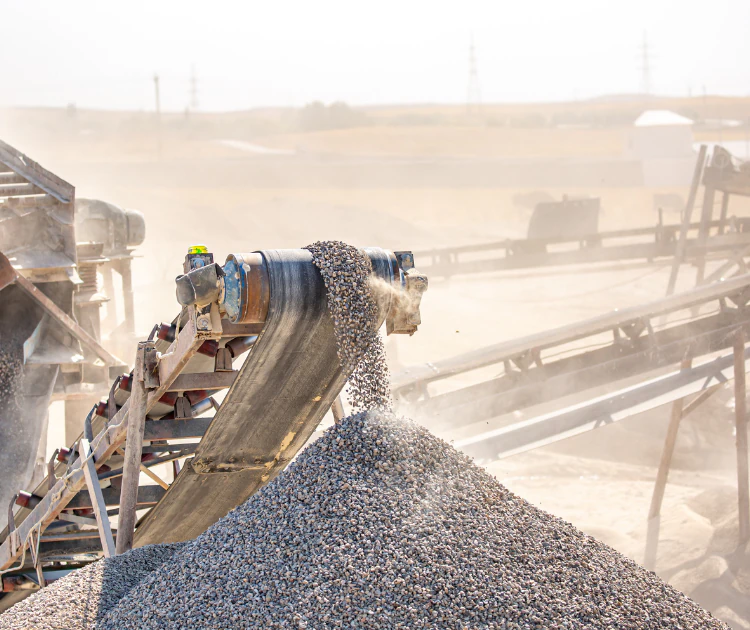
This is an environment of extreme abrasion. Plates here are used for rock sieving and ore sorting, helping to grade materials by size. They are also critical in slurry separation, ensuring that valuable minerals are captured while waste is discarded
4. Oil & Gas:
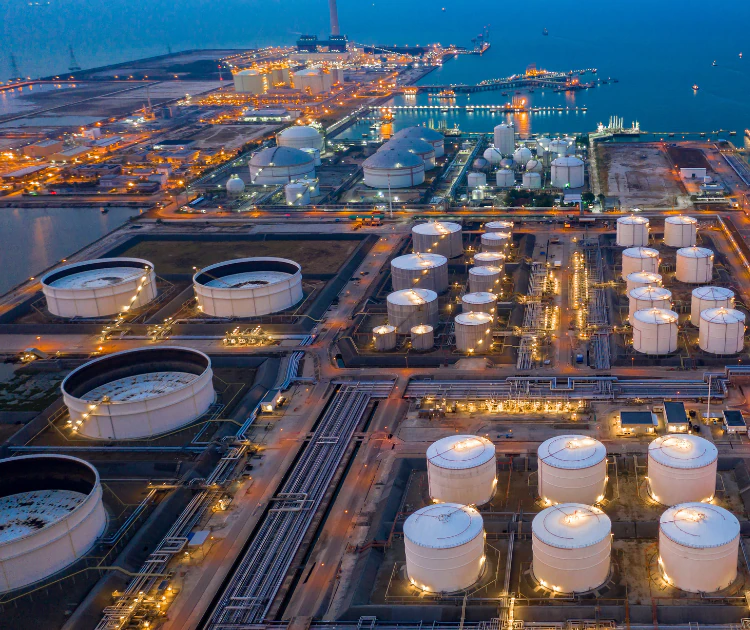
In this high-stakes industry, perforated media act as sand control screens in wells, preventing sand ingress that could damage extraction equipment. They are also used in mud filtration systems.
5. Pharmaceuticals & Chemicals:
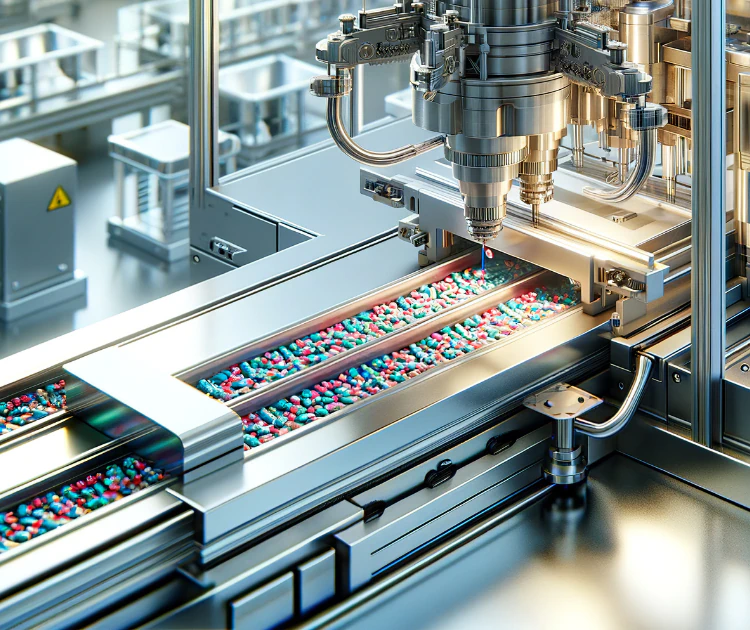
Precision separation is required for product consistency. Applications include tablet sieving and ingredient separation in pharmaceuticals, as well as components for distillation trays and gas scrubbers in chemical plants.

6. Agriculture:
From harvest to processing, perforated screens are used for grain cleaning, removing chaff and debris. They are also essential for seed grading and fertiliser screening to ensure uniform product sizes.
Specialised Solutions: Milling and Food Processing
Beyond standard sheets, Tegman specialises in consumables for the milling and food processing industries. These sectors often require plates that are not just flat sheets but engineered components.
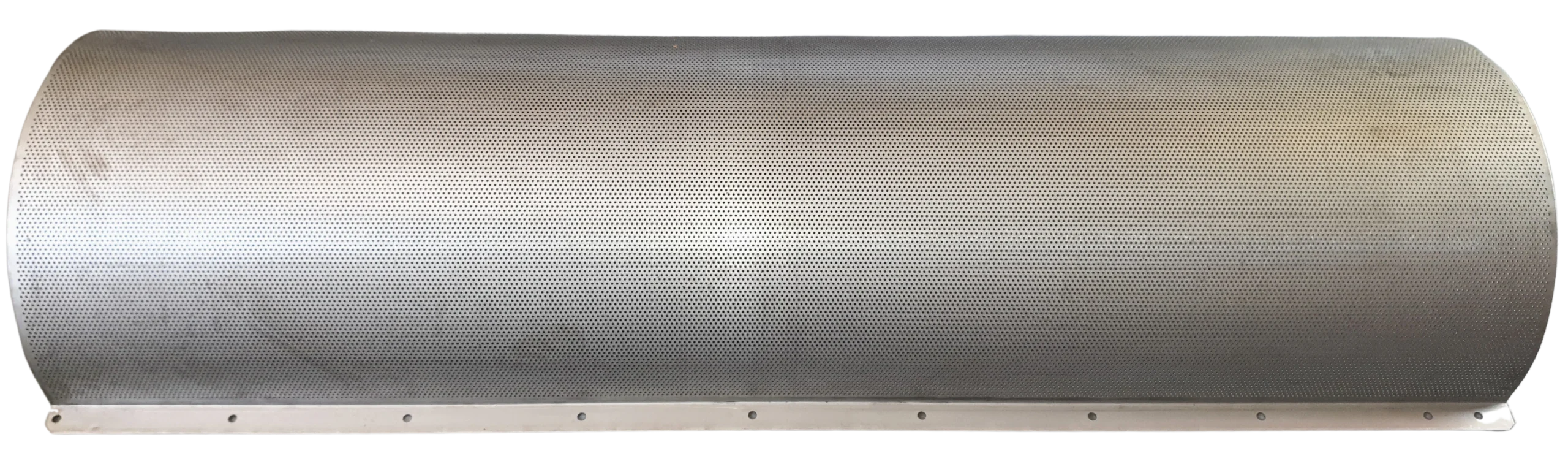
Hammer Mill Plates For the animal feed and milling industries, the hammer mill is a critical machine. Tegman supplies Hammer Mill Plates that are:
-
Rolled to specification: Curvature is critical for the fit within the mill.
-
Material variety: Available in a large range of apertures and materials, including hardened material that has been tried and tested for durability.
-
Custom sizes: Cut to size with specific mounting holes (e.g., 6 mm and 8 mm) to fit your machinery perfectly.
Additional Consumables Tegman also stocks and manufactures related items such as:
-
Wedge Wire Sieve Bends and cylinders.
-
Centrifuge Basket Segments for high-speed separation.
-
De-Germinator Screens and diffuser plates.
-
Sweco Rings and re-meshing services for circular vibratory separators.
Engineering and Custom Fabrication
While stock availability is important for quick repairs, many industrial applications require a custom fit. Tegman is not just a stockist; they are an engineering partner.
Supported by an in-house engineering workshop, Tegman can design, engineer, and fabricate any perforated product to specific requirements. This includes the manufacturing of:
-
Wooden screening frames.
-
Custom baskets, filters, and strainers.
-
Engineered filtration systems.
This internal capability allows for strict quality control and ensures that even non-standard requirements can be met efficiently.
Key Considerations When Ordering
To ensure you receive the correct product for your application, it is important to provide the right data. Tegman recommends considering the following eight factors when placing an order :
-
Aperture Type: Do you need round, square, or slotted holes?
-
Hole Sizing and Pitch: What is the diameter of the hole and the distance between hole centres?
-
Material Type: Mild Steel, Stainless Steel (304/316), or Aluminium?
-
Material Thickness: How thick must the plate be to withstand the pressure?
-
Plate Sizes: Standard sizes are available (e.g., 1225 x 2450 for Mild Steel), but custom sizes may be needed.
-
Aperture to Plate Thickness Ratio: Ensure the hole size is feasible for the thickness of the material (generally, holes cannot be smaller than the material thickness).
-
Material Strength (MPA/UTS): Is the material strong enough for the structural load?