
In any successful quarrying, mining, or large-scale recycling operation, the screening plant is the heart of the entire process. It is the critical control point that dictates product quality, influences throughput, and ultimately, drives profitability. When your screens are running efficiently, correctly sized material flows smoothly, and production targets are met. But when issues arise, the consequences ripple outwards, causing costly unplanned downtime, contaminating product stockpiles, and putting immense strain on downstream equipment.
From Problems to Profit
Too often, common problems like blinding, pegging, or premature wear are seen as unavoidable costs of doing business. This guide is here to show you that they are not. By moving from a reactive to a proactive strategy, you can solve these persistent challenges. This article provides a comprehensive overview of common screening media issues and solutions, giving you the insight to enhance your plant’s performance.
By understanding how to correctly specify, install, and maintain your screening media, you can significantly boost plant efficiency, reduce your cost-per-tonne, and achieve a safer, more profitable operation.
Screening Media Problems and Solutions
Issue #1:
Blinding & Pegging: The Efficiency Killers
Of all the challenges that can halt a screening operation, few are as persistent and disruptive as blinding and pegging. Though the terms are often used interchangeably, they describe two distinct problems that severely impact your plant’s efficiency:
-
Blinding is what happens when fine, wet, or sticky material, like damp sand or clay, smothers the screen. It clogs the apertures and creates a solid, impassable surface, preventing any further material from being correctly sized.
-
Pegging occurs when particles that are very close to the size of the apertures—often called near-size material—become wedged in the openings. This effectively reduces your available screening area, particle by particle.
Both issues are major productivity killers. They cause a loss of valuable, correctly sized product into the oversize stream, which contaminates stockpiles and can force downstream crushers to do unnecessary work. Crucially, they lead to costly shutdowns for difficult and time-consuming manual cleaning of the screen decks.
Solution:
Specify Self-Cleaning Media: to Combat Clogging
While traditional woven wire is a reliable choice for many applications, its rigid, fixed apertures can make it susceptible to blinding and pegging when processing difficult materials. The definitive solution is to specify an advanced screen media engineered to actively resist this type of clogging.
Self-cleaning screens, such as Tegman’s EaziFlow (also known as Flex-Mats), are designed precisely for this purpose. Unlike conventional screens, their construction features independently vibrating longitudinal wires held together by durable polyurethane strips. This unique design creates a constant flexing and flicking motion across the screen surface.
This “lively screen action” actively dislodges sticky particles before they can blind the screen and ejects any wedged, near-size material before it can peg the apertures. By strategically replacing conventional wire with EaziFlow media on problematic decks, you can solve one of the most common screening media issues and solutions, transforming a constant bottleneck into a highly efficient and productive part of your plant.
Issue #2:
Abrasion & Impact: The Causes of Premature Wear
Even when your screen media isn’t blinding or pegging, it’s under constant, relentless attack from the material passing over it. This wear and tear is a primary cause of premature screen failure and can be broken down into two distinct forces:
-
Abrasion: This is the grinding, sanding effect caused by hard, sharp-edged materials like granite, sand, or crushed glass. It slowly erodes the surface of the screen wires or panels, thinning them out until they eventually break.
-
Impact: This is the heavy, crushing force exerted by large, heavy feed material being dropped onto the screen deck from a height. High impact can cause screen wires to stretch, deform, or fracture, leading to a loss of tension and sizing accuracy long before the screen is worn out by abrasion.
Both forces lead to the same outcome: costly unscheduled downtime for screen replacement. A screen that fails prematurely not only halts production but also carries the risk of contamination, allowing oversize material to enter your final product stockpiles and potentially damaging downstream equipment like cone crushers.
Solution:
Match the Material: to Your Application
The solution to premature wear is not to simply keep replacing screens, but to select a screen media material specifically engineered to withstand the dominant forces in your unique application. As a leading supplier, Tegman offers a complete range of media to provide the optimal balance of durability, open area, and cost-effectiveness. This is one of the most crucial screening media issues and solutions to get right.
For High-Abrasion Environments: Polyurethane Screen Media
When your primary challenge is sliding abrasion, polyurethane screen media is the superior choice. Polyurethane is a highly resilient and energy-absorbing synthetic polymer. Instead of fighting the abrasive material, it yields slightly and then rebounds, significantly reducing the rate of wear. In applications processing highly abrasive fines, a polyurethane panel can outlast a traditional steel wire screen many times over, dramatically extending service intervals and lowering the total cost of ownership.
For High-Impact and Sizing Accuracy: High-Tensile Steel Woven Wire
When dealing with heavy impact from large feed sizes or when precise sizing is absolutely critical, high-carbon, high-tensile steel woven wire is the industry standard for a reason. This specialised steel is heat-treated to achieve exceptional hardness and strength, allowing it to resist the heavy blows and vibrations without fracturing or deforming. Its rigidity ensures that the apertures maintain their exact shape, providing consistent and accurate product sizing throughout the screen’s lifespan.
By correctly diagnosing the type of wear affecting your plant, you can select the right material for the job, transforming a recurring cost into a long-term, reliable investment.
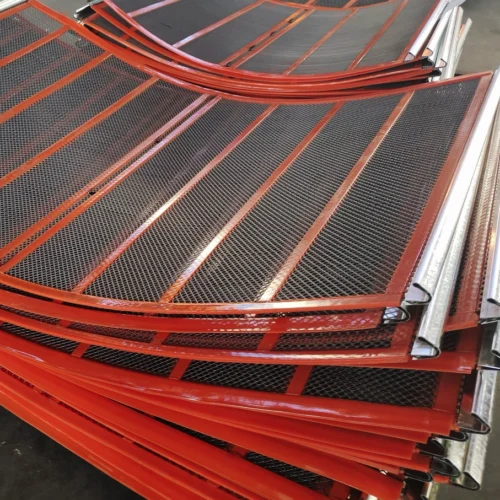
EaziFlow / Flex-Mats
High-efficiency, self-cleaning media ideal for materials prone to pegging and blinding.
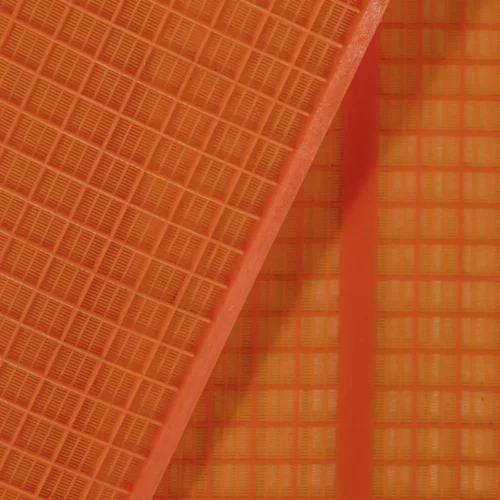
Polyurethane screens
Modern, cost-effective, and high-performance solution for a wide range of screening applications.
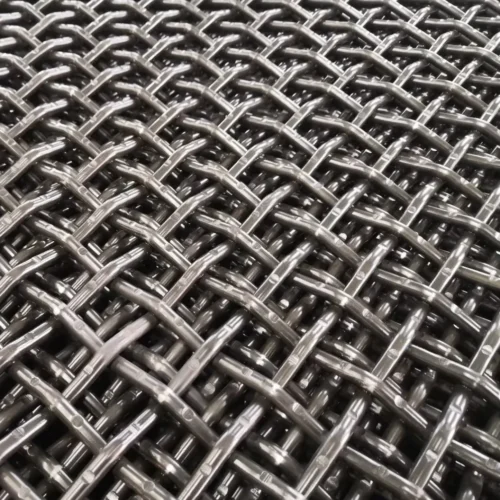
Woven Wire Screens
Versatile and effective solution for a wide range of screening applications.
Issue #3:
Structural Failure: Cracking and Breakages
A screen can be made from the perfect material and still fail prematurely if it is not supported correctly. Structural failure is one of the most frustrating problems a plant manager can face. This issue often appears as:
-
Cracking along the hook strips: The screen begins to tear away from the clamping mechanism at the edge of the deck.
-
Premature fractures in the centre: The screen breaks in the middle of the screening area, even though the wire or panel surface shows little abrasive wear.
When these failures occur, the immediate assumption is often that the screen media itself was faulty. However, in the vast majority of cases, these breakages are symptoms of a deeper, underlying problem. The root cause is almost always related to the support structure and installation of the screen.
A screen that is not properly tensioned will flap violently against its support bars during operation. This constant, high-frequency vibration puts immense stress on the entire screen panel, particularly at the hook points and in the centre, leading to metal fatigue and eventual fracture. Furthermore, worn-out components on the screen deck itself, such as flattened capping rubber or grooved support bars, create an uneven surface that concentrates stress on small areas of the screen, guaranteeing a premature failure.
This type of failure is particularly damaging because it not only stops production but can also harm the screen machine itself. A loose, vibrating screen can cause cracks in the machine’s side plates and support structure, turning a simple screen replacement into a major and expensive repair job.
Solution:
Focus on a Complete System Approach
The solution to structural failure lies in shifting focus from the screen itself to the entire screening system. A screen panel is not an isolated component; its performance and lifespan are directly dependent on the quality of its installation and the condition of its supporting parts. Addressing this is the final key to resolving common screening media issues and solutions.
A proactive approach involves regularly inspecting and replacing worn screening accessories. These are not optional extras; they are critical components that ensure your screen media functions as intended.
-
Capping Rubber: This rubber or polyurethane strip sits on top of the screen deck’s support bars. It acts as a vital cushion, protecting the underside of the screen from the sharp steel frame during vibration. Worn or flattened capping rubber must be replaced to prevent premature screen failure.
-
Clamping Plates & Tension Bolts: These components secure the screen hooks to the machine. Using high-quality, heavy-duty clamping plates and high-tensile tension bolts ensures the screen can be brought to the correct tension evenly across its width. Proper tension is the single most important factor in preventing flapping and structural fatigue.
Investing in quality accessories is a low-cost insurance policy against the high cost of premature screen failure and catastrophic machine damage.
Issue #4:
Poor Product Specification & Contamination
ometimes a screen can be running without clogging or breaking, yet still fail at its primary job: producing correctly sized material. This issue manifests in two critical ways:
-
Contamination of Final Product: Oversize particles make their way into the final product stockpile, causing it to fall outside of the required specification. This can lead to customer rejection, financial penalties, and damage to your reputation.
-
Loss of Good Product: Valuable, correctly sized fine material is carried over into the oversize stream. This is a direct loss of profit that either ends up in a waste pile or has to be re-processed, adding unnecessary operational costs.
This problem is almost always a result of a mismatch between the screen media’s aperture and the desired product outcome. It can be caused by an incorrect initial selection of the aperture size or shape (e.g., using a square aperture when a slotted one would be more efficient). More often, however, it is the result of a worn-out screen. As screen media wears down, its apertures can enlarge, allowing oversize particles to pass through and corrupt the final product.
Solution:
Conduct a Screening Audit & Verify Apertures
The solution to poor product quality is to take a data-driven approach to your screening media selection. Instead of guessing, you need to precisely match the screen’s specifications to your production goals. Tackling this final point is essential for a complete approach to screening media issues and solutions.
The most effective method is to conduct a screening audit. This process involves taking samples of the material being fed onto the screen and samples of the final products. By analysing the particle size distribution, you can get a clear picture of exactly where the inefficiency lies. This data allows you to:
-
Verify the Correct Aperture: The audit will prove whether the chosen aperture size and shape (square, slotted, etc.) are optimal for creating the desired product from your specific feed material.
-
Identify Worn Media: If the aperture selection is correct but oversize is still passing through, the audit provides clear evidence that the existing screen media is worn beyond its effective service life and needs to be replaced.
Leveraging technical expertise is key to this process. A screening specialist such as Tegman can help you analyse your operation and the audit data to recommend the precise screen media configuration needed to produce a clean, on-spec product consistently. This transforms your screening from a potential point of failure into a reliable quality control powerhouse.
A Proactive Strategy for Screening Success
As we’ve seen, the most common and costly screening issues—from blinding and contamination to premature wear and structural failure—are not unavoidable. They are solvable problems. The key is to shift from a reactive mindset of simply replacing broken parts to a proactive strategy focused on correct specification, installation, and data-driven analysis.
By diagnosing the specific challenges in your plant, you can make informed decisions:
-
Combat clogging with advanced self-cleaning media.
-
Fight wear by matching the material—be it polyurethane or high-tensile steel—to your unique application.
-
Prevent breakages by ensuring your screens are properly tensioned and supported by high-quality accessories.
-
Guarantee quality by conducting audits to ensure your aperture selection is perfectly matched to your product goals.
This holistic approach transforms your screening media from a consumable part into a long-term investment in your plant’s efficiency, safety, and profitability. Instead of constantly battling downtime, you can achieve consistent throughput and superior product quality.
If you are facing any of the challenges discussed in this guide, you don’t have to solve them alone. The next step is to get expert advice tailored to your specific operation.
Download and view our brochures for additional details, or contact our team for a customised quote.