
In countless industrial processes, from mineral processing to food manufacturing, the success of the entire operation hinges on one critical step: the effective separation of solids and liquids. When this process fails—whether through clogging, media failure, or inefficiency—the consequences can be severe, leading to costly downtime, poor product quality, and reduced profitability. While traditional methods like woven mesh and perforated plates have their place, demanding applications require a more advanced, robust, and efficient solution.
This is where wedge wire screens come in.
As a leading manufacturer and supplier of separation media, Tegman provides a comprehensive range of wedge wire products engineered for the toughest industrial challenges. A wedge wire screen is not just a piece of metal with openings; it is a highly engineered product that provides a unique combination of two critical features: immense mechanical strength and superior aperture efficiency. This article will explore the science behind wedge wire technology, its diverse applications across major industries, and how Tegman’s custom fabrication capabilities can deliver the perfect solution for your process.
The Science Behind the Slot: Why Wedge Wire Excels
The remarkable performance of a wedge wire screen stems from its unique construction. It consists of V-shaped or wedge-shaped profile wires that are resistance-welded onto support rods at precise intervals. This design creates a smooth, non-clogging surface with several distinct advantages over other screen types.
The V-Shaped, Non-Clogging Profile
The secret to wedge wire’s efficiency lies in the shape of the profile wire. When a slurry or stream passes over the screen, the V-shape creates only two contact points for any particle. This design ensures that any particle that is only slightly smaller than the slot will pass through without getting stuck. This drastically reduces the risk of blinding and pegging, common issues with woven wire mesh where near-size particles can become lodged in the apertures. This self-cleaning characteristic ensures a consistent flow rate and minimises the need for manual cleaning or backwashing, saving both time and operational costs.
Continuous Slot for Maximum Open Area
Unlike a perforated plate, which has individual holes separated by solid material, a wedge wire screen features a continuous, uninterrupted slot. This design maximises the available open area for a given aperture size, allowing for greater throughput and higher drainage or filtration capacity. Tegman can manufacture screens with precise apertures ranging from a very fine 0.1mm up to 15mm, ensuring the perfect balance between open area and particle retention for any application.
Exceptional Strength and Durability
The welded construction of wedge wire screens results in a rigid, single-piece structure with exceptional mechanical strength. This allows the screens to withstand high pressures, heavy loads, and significant impact without deforming or failing. This inherent durability makes them far superior to woven wire mesh in abrasive or demanding environments, leading to a significantly longer service life and a lower total cost of ownership. The screens can be easily rolled, bent, and welded into various shapes to suit specific equipment, making them incredibly versatile.
Wedge Wire Screens Application Examples:
Application 1: High-Capacity Dewatering with Sieve Bends (DSM Screens)
One of the most common and effective applications of wedge wire technology is in the form of a Sieve Bend, also known as a DSM or curved screen. These are static, curved wedge wire screens used primarily for the dewatering, classification, and separation of solids from liquid or slurry streams.
As a slurry is fed onto the top of the curved screen, the sharp leading edge of each profile wire effectively “slices” away a thin layer of water and fine particles, which then pass through the slot. The angle of the screen and the speed of the flow cause the larger solid particles to roll and tumble down the surface, becoming progressively dewatered before being discharged at the bottom. This efficient, gravity-fed process requires no moving parts, making it a low-maintenance and highly effective separation solution.
Sieve bends are indispensable in a wide range of industries:
- Mining & Minerals: For dewatering coal, iron ore, gold, and phosphate slurries, as well as classifying fine particles and desliming processes.
- Sugar Industry: Crucial for removing bagasse (fibres) from sugar juice and dewatering sugar mud to maximise recovery.
- Pulp & Paper: Used for recovering valuable fibres from white water and dewatering paper pulp before processing.
- Wastewater Treatment: An essential component for screening and removing solids from industrial wastewater during primary and secondary treatment stages.
- Food & Beverage: Ideal for starch separation (e.g., from corn or potatoes) and dewatering waste from vegetable and fruit processing.
Application 2: Precision Filtration with Cylinders, Baskets, and Elements
The same principles that make wedge wire so effective in a flat or curved form can be applied to cylindrical designs for precision filtration and straining. Tegman can fabricate wedge wire into cylinders, baskets, candle filters, and other custom elements to meet the specific needs of pressurised or flow-through systems.
The flow can be designed to go from outside-to-inside (retaining particles on the exterior for easy cleaning) or inside-to-outside (collecting particles within a basket). This versatility makes them ideal for:
- The Oil Industry: Used in the fabrication of robust wedge wire baskets, cylindrical screens, filters, and strainers for various refining and processing stages.
- Chemical Processing: For catalyst support, separation of chemical slurries, and filtering of finished products.
- Food & Beverage: Custom filters, strainers, and centrifuge baskets used in milling and food processing ensure product purity and efficient separation.
- Water Treatment & Intake: Wedge wire cylinders and laterals are the global standard for water intake screens in rivers and lakes, preventing debris from entering pumps while protecting aquatic life due to the low through-slot velocity.
A Quick Comparison: Wedge Wire vs. Other Media
To fully appreciate the value of wedge wire, it helps to compare it to other common separation media.
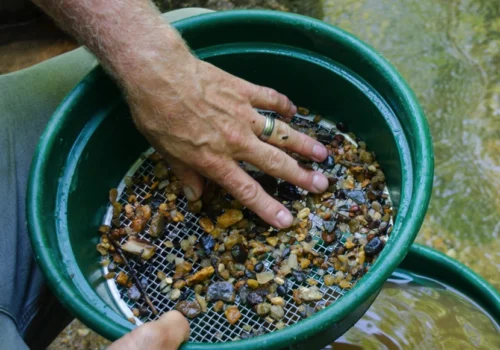
VS. Woven Wire Mesh: Woven wire mesh, which Tegman also supplies in materials like SS304 and SS316, offers a high initial open area. However, its crimped construction can lead to pegging and blinding, and it lacks the structural rigidity of welded wedge wire, making it susceptible to stretching and damage under heavy loads.
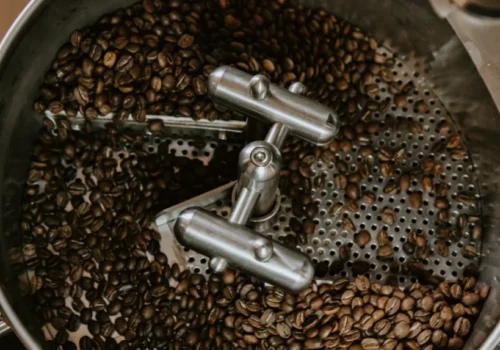
vs. Perforated Plate: Perforated plate is exceptionally strong and abrasion-resistant. However, its punched holes result in a significantly lower open area compared to wedge wire. Furthermore, the straight-sided holes lack the non-clogging properties of the V-shaped slot, making it less suitable for fine filtration or sticky materials.
Wedge wire is the superior choice when your application demands a combination of all three critical properties: strength, a high, non-clogging open area, and longevity.
Customised For Your Process: Tegman’s Fabrication Capabilities
Every industrial process is unique, and a one-size-fits-all approach to filtration is rarely effective. At Tegman, our in-house engineering and fabrication services are a core part of our offering, allowing for exceptional quality control and the ability to create truly bespoke solutions.
We work directly with you to understand your process parameters—flow rate, particle size, pressure, and desired outcome—to design and manufacture the perfect wedge wire product. Our capabilities include:
- Versatile Forms: We can create flat sheets, curved sieve bends, cylinders, cones, baskets, laterals, and other custom elements.
- Premium Materials: We primarily work with high-grade stainless steel, including SS430, SS304, SS316, and SS31L, to ensure corrosion resistance and product purity.
- Engineered Flow Types: We can configure the screen for standard flow, internal circumferential wire flow, axial wire flow, and more to match your equipment and process dynamics.
Conclusion: The Superior Solution for Demanding Separation
Wedge wire screens represent the pinnacle of separation media, offering a technically superior solution that delivers unparalleled efficiency, durability, and reliability. Their non-clogging design, high strength, and customisable nature make them the ideal choice for critical applications where performance cannot be compromised. By investing in a well-designed wedge wire solution, you are not just buying a screen; you are investing in greater throughput, reduced downtime, and a more profitable operation.
From dewatering mining slurries to filtering fine food products, Tegman has the expertise and manufacturing capability to engineer the perfect custom wedge wire solution for your needs.
Take the next step towards optimising your process. Contact our industrial products division today to discuss your specific application and receive a detailed quote from our technical experts.